What happens when ancient mythology, tarot, and contemporary art come together in a deck of cards? For designer and artist Spiros Drakatos and his creative partner Tonia, the answer is Mythic Archetypes: a project that invites people to explore familiar tarot ideas through the symbolism of Egyptian mythology—and discover what those symbols mean to them.
In this conversation with Every Day Tarot podcast host Camille A. Saunders, Spiros shares how the project took shape, why tarot became its format, and how a web app brings its layered imagery to life.
From mythology research to a tarot deck
The project grew from a convergence of interests. Tonia already had a strong connection to tarot, while Spiros was researching Egyptian mythology for a separate design project. That research sparked a question: how could mythology and tarot meet in a form people could engage with directly?
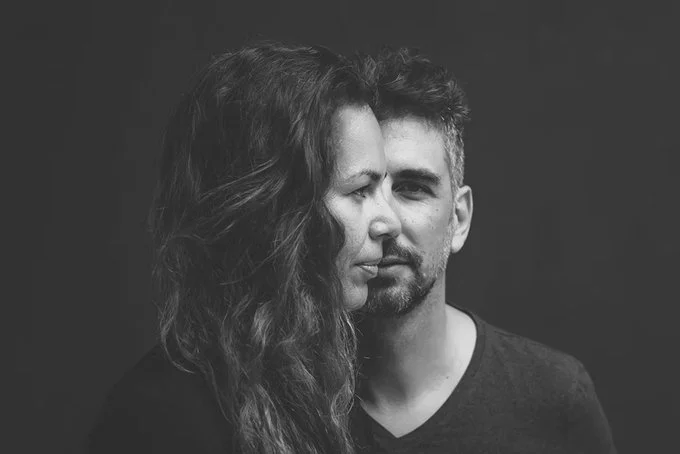
Spiros and partner Tonia
Spiros saw a connection in the way ancient cultures used stories and symbols to make sense of the world. Though separated by time and place, people have long grappled with many of the same questions, fears, and hopes. A symbolic system can help make those ideas tangible.
Tarot offered a welcoming way to explore them. Rather than presenting mythology as an academic subject, the cards could give people something to hold, return to, and interpret for themselves.
Balancing tradition with a fresh perspective
One of the project’s biggest challenges was finding the right balance between tarot tradition and the team’s own interpretations. Mythological figures don’t always map neatly onto tarot cards, and the same deity can carry several meanings.
Spiros shared examples of the choices involved. Osiris might seem like a natural fit for Judgment, but he and Isis became the Lovers, drawing on their relationship. For the Devil, the team chose Apep—the serpent who tries to consume the sun—as an alternative to a more expected association with Set.
These decisions weren’t about declaring one definitive interpretation. They were part of creating a starting point for readers to bring their own knowledge, intuition, and experience to the cards.
Discovering the complexity of Egyptian mythology
Research revealed how varied Egyptian mythology is across different periods. Spiros described how beliefs and stories evolved over time, with new traditions absorbing and expanding on earlier ones rather than simply erasing them.
That evolution shaped the project’s approach. The deck doesn’t treat mythology as a fixed set of answers; it draws on a history of reinterpretation. The accompanying book provides context for readers who want to explore the mythology behind the imagery, while leaving room for personal discovery.
A tarot tactile deck with a digital companion
The creators wanted the physical cards to remain at the heart of the project: the paper, texture, box, and book are part of the experience. At the same time, a web app offered a way for more people to encounter the project through a screen.
The app features a simple three-card spread created for the deck. It gives users a chance to see the cards, explore the project’s approach, and reflect on the connections that emerge. As Spiros describes it, the app carries the message even if it can’t reproduce the feeling of holding the physical cards.The digital experience is an invitation—not a substitute for the deck.
Symbols designed to invite interpretation
The deck’s visual style pairs black-and-white ink with gold and silver. These materials are more than decoration: the gold evokes the sun, while silver suggests the moon, echoing the project’s associations between imagery, deities, and different kinds of energy.
Spiros also spoke about the care the team took to create an artistic style that felt grounded and intentional. In a world where questions about AI-generated imagery are increasingly common, the creators wanted the work to feel like a considered artistic project, with each visual choice connected to the ideas behind it.
The result is an experience that goes beyond a collection of striking cards. The imagery, physical materials, book, and app all contribute to a larger symbolic world.
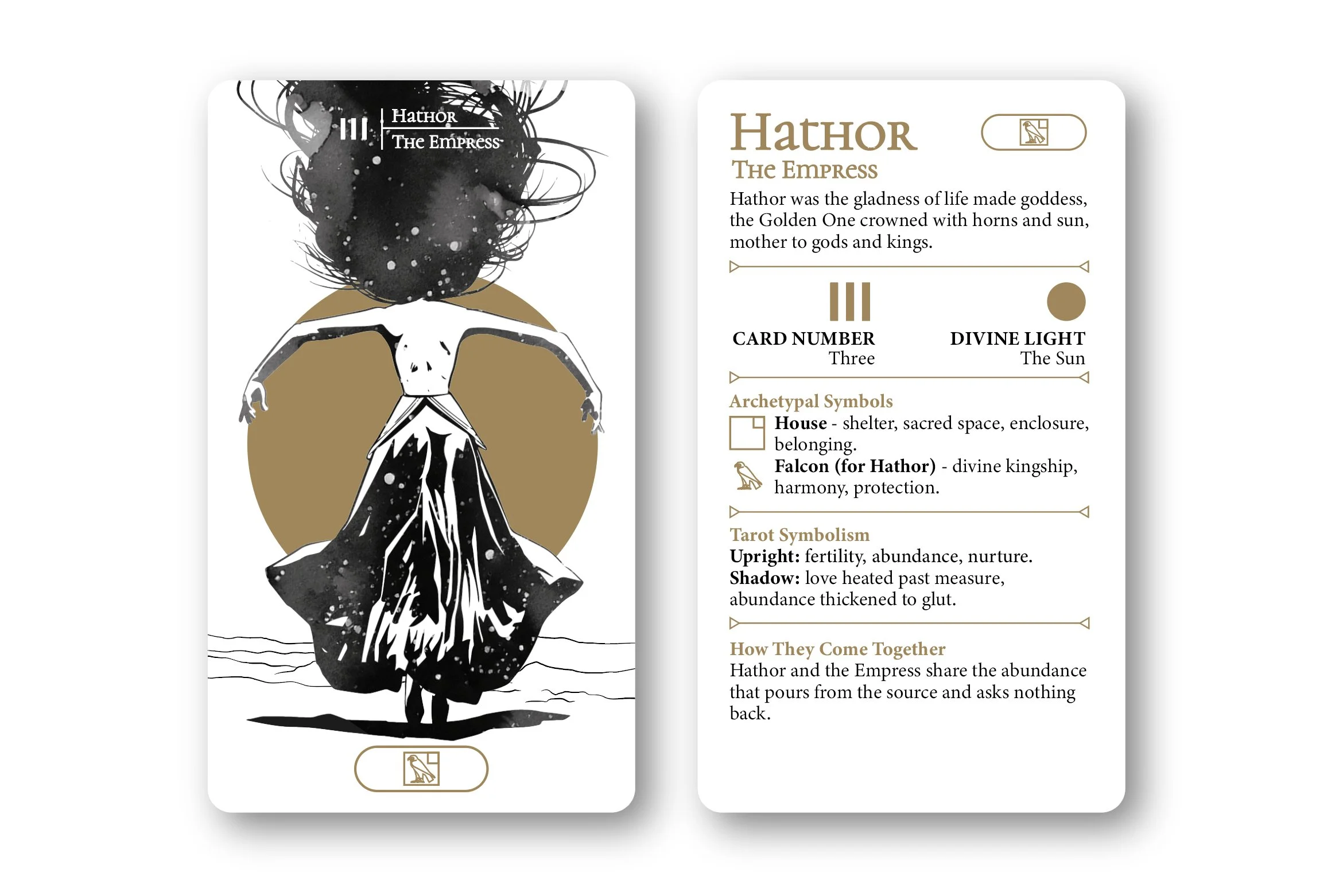
Hathor, which Spiros shared is his favorite card
Art that leaves room for personal meaning
During the conversation, Spiros recalled a past installation he created with Tonia: a large set of wooden wings. One visitor stood in front of the work and began to cry. The artists never learned what the piece meant to her, but that moment stayed with him.
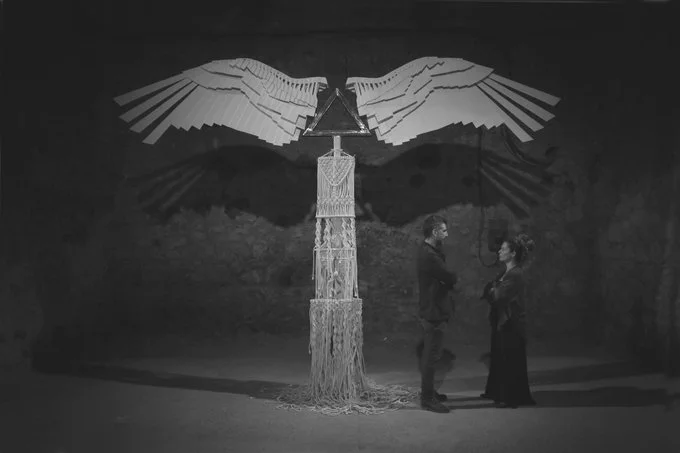
Installation created by Spiros and Tonia
It illustrated a central idea behind Mythic Archetypes: art can move people in ways its creators can’t always predict. A symbol might prompt one person to reflect on a story from mythology, while another sees a connection to their own life.
That openness is part of the deck’s purpose. You can approach the cards through their traditional meanings, explore the mythological references, or follow the associations that arise for you. The project offers layers without insisting that every reader arrive at the same conclusion.
A deck that invites you to explore
Mythic Archetypes brings together Egyptian mythology, tarot, and visual design in a format meant to be explored over time. Its cards don’t ask readers to find one perfect interpretation. They invite curiosity: look closely, notice what resonates, and let the symbols become part of your own reflection.
For Spiros, that connection is the point. If the work gives someone a meaningful moment with a card, a symbol, or an idea, then it has done something worthwhile.
Listen to the conversation on Everyday Tarot with Camille A. Saunders and guest Spiros Drakatos. Find the project links and interactive web app below.
🌙 Support the Podcast 🌙
Feeling artistically inspired? Purchase my workshop: Create Your Own Tarot Cards: Art, Archetypes, and Intuition and craft your own card today!
If you loved the episode and want more, head over to Patreon to check out my exclusive tarot draw, and join us for the rest of the reading.
Grab my Scorpio Rebirth 5-card Tarot Spread that I created for this season, https://camille-a-saunders.kit.com/products/scorpiorebirthtarotworkbook
Want to dive deep? Book your one on one Scorpio Rebirth Tarot Spread Reading with me https://camille-a-saunders.kit.com/products/scorpiorebirthtarotspread
Join my newsletter list to my FREE 5-card Tarot Spread and workbook.
Check out all the books I reference on the podcast here
References:
Check out Mythic Archetypes on Instagram, https://www.instagram.com/mythicarchetypes/
Get an overview of the project here, https://www.kickstarter.com/projects/1sickpuppy/mythic-archetypes-tarot-egypt
We have also created a small web app as an interactive preview to the major arcana that I use and reference in the episode, https://mythic-archetypes.netlify.app/