Rachel Bochner’s I Guess a Good Thing Couldn’t Go Down Gently Album Through Tarot: A Song-by-Song Reading
Rachel Bochner’s debut album I Guess a Good Thing Couldn’t Go Down Gently is more than a breakup record—it’s a study in grief, guilt, desire, and transformation. In this tarot-based listening guide, we look at the album track by track and explore how the cards reflect its emotional arc, from self-blame and avoidance to reckoning and healing. If you’re curious about the album, tarot symbolism, or how music and divination can speak to each other, this is for you.
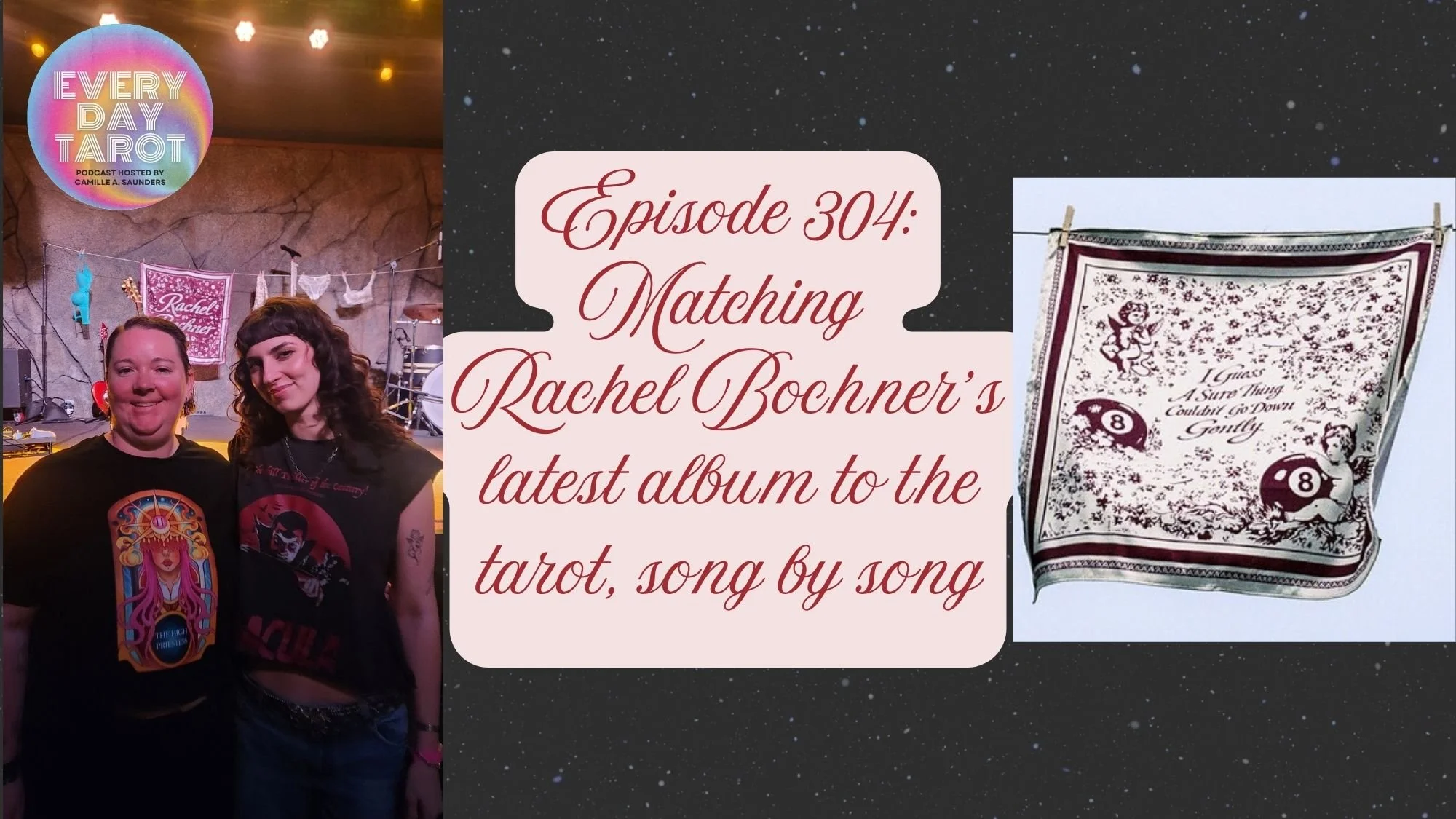
I got a chance to meet Rachel Bochner at her Seattle show and it was so fun chatting with them and talking all things tarot!
How Tarot Helps Decode I Guess a Good Thing Couldn’t Go Down Gently
One of the reasons this album works so well as a tarot reading is that it’s already built around symbols, reversals, duality, and transformation. Rachel Bochner’s writing is deeply image-driven. She doesn’t just tell you that a relationship ended—she gives you the moving boxes, the furniture, the guilt, the clothes, the photographs, the silence, and the aftershock.
That makes tarot a surprisingly natural lens for the record. Each card reflects a different emotional register: anxiety, longing, power, denial, desire, and release. Instead of flattening the album into one simple narrative, tarot helps reveal how messy the experience really is.
Why this album feels so tarot-coded
Bochner has already shown a pattern of weaving tarot into her work. She references the Two of Cups, tarot readings, and symbolism around love and choice across her songs. That matters because the album doesn’t just borrow tarot aesthetics—it moves like tarot. It asks questions, reveals hidden meanings, and keeps returning to the same emotional truths from different angles.
The album also fits tarot because it lives in liminal space. It’s about endings, yes, but also about what comes after the ending. That is classic tarot territory: not certainty, but insight.
The Early Tracks: Guilt, Grief, and the Need for Balance
The opening stretch of the album is where the emotional weight hits hardest. These songs are full of self-questioning—How was I supposed to know? Do you still think about me? Did I do this wrong?
That’s where the tarot readings land in a very specific place: the mind trying to justify what the heart already knows.
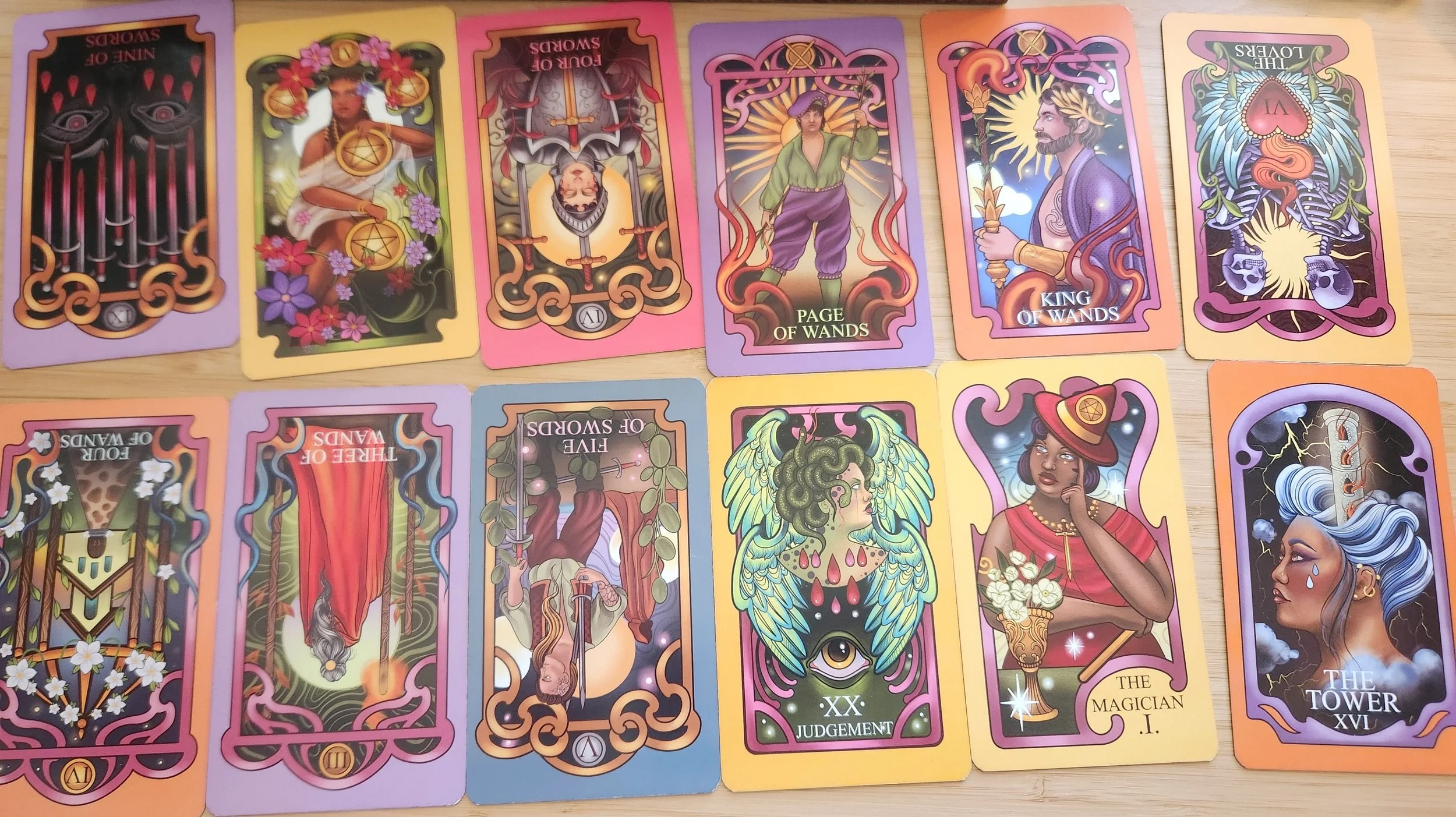
The full tarot spread starting with the Nine of Swords Reversed for Song 1 through The Tower for Song 12. Enjoy! These cards were pulled from the Snag Tarot deck by founder Brie and art by Sophie.
“How Was I Supposed to Know” and the Nine of Swords Reversed
The Nine of Swords reversed is a card of mental overload, but also of potential release. Upright, it can signal anxiety, guilt, and sleepless spirals. Reversed, it suggests the beginning of a shift—not complete peace, but the first moment when self-blame starts to loosen its grip.
That matches the song perfectly. Bochner’s opening track feels like an attempt to narrate confusion after the fact. The repeated question—how was I supposed to know?—is both genuine and defensive. It’s the sound of someone replaying the breakup from every possible angle, hoping the answer will absolve her.This is where tarot offers compassion. The Nine of Swords reversed doesn’t ask you to erase regret. It asks you to stop punishing yourself as if suffering were the same thing as accountability.
“Say That You Don’t” and the Four of Pentacles
If the first song is about spiraling, this one is about holding on. The Four of Pentacles is a card of grip and resistance. It can show fear of change, fear of loss, or a desperate attempt to control what cannot be controlled.
That’s the exact emotional tension in “Say That You Don’t.” Bochner is trying to manage guilt by imagining that the other person will say they’re okay, that they don’t think about her, that the hurt didn’t land as hard as she fears it did. It’s understandable. If the pain is less real on the other side, then maybe her leaving hurts less too.
But the Four of Pentacles reminds you that clinging is not the same as repairing. Sometimes you hold tight because you’re afraid to face the full truth. This song sounds like that fear.
“Devil” and the Four of Swords Reversed
The next major emotional beat is exhaustion. “Devil” is where Bochner leans into the role of the villain, almost as if she’s trying to preempt the judgment of the person she left behind. She knows how she might be seen, and instead of resisting that, she lets the image harden around her.
The Four of Swords reversed is a perfect fit. Upright, this card is about rest, recovery, and retreat. Reversed, it can indicate that the pause is ending—or that you’re refusing to rest even though you desperately need to.
That’s the energy here. The song feels like a person who has pushed through enough emotional strain that the only thing left is collapse. There’s a kind of grim surrender in the line “let you paint me like the devil.” It’s not peace, exactly. It’s fatigue.
The Middle of the Album: Separation, Ambiguity, and Desire
Once the album moves into the middle stretch, the breakup becomes more physical and more complicated. Furniture gets divided. Clothes get borrowed. A relationship becomes a logistical problem, then a social one, then an emotional residue that won’t quite leave the room.
This is also where the album gets most interesting from a tarot perspective, because the cards start to show motion. Wands enter the picture. Major Arcana begin to appear. The energy gets hotter, more unstable, and more alive.
“Furniture” and the Page of Wands
“Furniture” is a breakup song grounded in logistics, but it also contains a spark of motion. The Page of Wands is the card of new energy, curiosity, and beginnings. It doesn’t mean everything is figured out. It means something has started.
That works beautifully for this song. Yes, the relationship is ending. Yes, the practical details are sad and specific. But there’s also a sense that the ending itself is making room for the next version of self. The Page of Wands says: you do not need to have the entire future mapped out to take the first step.
The line “I guess a sure thing couldn’t go down gently” is the kind of lyric that feels like it belongs in a card reading. It admits that certainty doesn’t protect you from pain. Sometimes the thing you thought was stable breaks hardest.
“Stupid!!!” and the King of Wands
“Stupid!!!” brings more heat, more friction, and more impulse. The King of Wands adds a layer of command to that energy. This is a card of vision and initiative, but also responsibility. It asks: what are you building, and who gets affected by your choices?
That tension is all over this song. There’s desire, confusion, jealousy, and the sense that somebody is making bold moves without fully understanding the consequences. The King of Wands doesn’t just represent passion—it represents the person who has to live with what passion sets in motion.
This makes the song feel less like a tantrum and more like a reckoning with bad decisions made under emotional pressure.
“Happier You’re Gone” and the Lovers Reversed
The Lovers reversed is one of the most emotionally precise cards for this album. Upright, The Lovers is about alignment, connection, and choice made with integrity. Reversed, it can point to misalignment, disconnection, or a relationship that no longer reflects who you are.
That’s exactly what “Happier You’re Gone” sounds like. The line “I’m happy you happened, but I’m happier you’re gone” is brutal, but it’s also honest. It doesn’t deny the value of the relationship. It just refuses to pretend that love alone made it sustainable.
This is a turning point in the album because it moves beyond guilt. It suggests that leaving was not only painful—it may also have been correct.
The Final Stretch: Reckoning, Self-Revision, and Healing
The last part of the album is where the tarot readings become most expansive. The emotional language widens from breakup-specific pain into something bigger: accountability, agency, myth, and reconstruction. These songs aren’t just about what ended. They’re about how you narrate what happened after it’s over.
“By Omission” and The Magician
The Magician is one of the strongest cards in the entire reading because it speaks to intention, tools, and the power of framing. The Magician says you already have what you need to create change.
That’s what “By Omission” is doing. It’s a song about memory, revision, and the stories we tell ourselves when the truth feels too large or too painful. Bochner is looking back and deciding what counts as evidence, what gets left out, and what version of the past she can survive.
The line “the hardest pill to swallow is that declaration doesn’t make it true” is especially Magician-like. Words matter. But words do not magically transform reality. The Magician reminds you to examine where your power really is—in what you choose to say, what you choose to make, and what you choose to admit.
“Fault Line” and Judgment
If “By Omission” is about revision, “Fault Line” is about reckoning. Judgment is the perfect card for that. It’s about awakening, honest reflection, and the moment when truths can no longer be avoided.
The song’s language is full of edge and consequence. There’s a sense that she’s both confessing and confronting. She calls herself a fault line—something that splits, shifts, and destabilizes. Judgment fits because it doesn’t just punish. It reveals.
That’s an important distinction. This card is not about moral panic. It’s about seeing clearly enough to understand what happened and why. And in this album, that means facing the possibility that the fracture was always there.
“Gentle” and the Tower
The album closes with tenderness, but not simplicity. “Gentle” sounds like a lullaby for the aftermath—the part where you finally look back without immediate panic. The Tower is a powerful final card because it represents collapse, but also transformation. Something has to fall for something else to be built.
That’s the emotional shape of the closer. Bachner is no longer in the middle of the breakup. She’s in the long after. She can see the outline of the damage, but she can also see how much she’s learned from it.
The Tower says the old structure could not hold. “Gentle” says maybe the next one can, if you build it with more care.
What This Album Says About Love, Choice, and Responsibility
Taken as a whole, I Guess a Good Thing Couldn’t Go Down Gently is about the cost of knowing yourself too late—and the relief of finally knowing yourself at all. Bochner doesn’t write as if the breakup was clean or easy. She writes as if it was necessary, confusing, and still unfinished in memory.
That’s what makes the tarot reading so effective. The cards don’t reduce the album to one message. They show how many things can be true at once: you can love someone and leave them, feel guilty and still be right, remember the future you wanted and accept the one you actually have.
For listeners, the takeaway is simple but hard: healing doesn’t require perfect innocence. It requires honesty, balance, and the courage to stop holding a version of the past that no longer fits.If you’re listening to this album, or reading the cards, ask yourself where you’re still trying to control the story instead of letting it tell the truth.
Frequently Asked Questions
Is I Guess a Good Thing Couldn’t Go Down Gently a breakup album?
Yes, but it’s more nuanced than that. It’s also about grief, identity, accountability, and the complicated process of recovering from a relationship that changed you.
Why does tarot work so well with Rachel Bochner’s music?
Her songs are full of symbolism, duality, and emotional turning points. Tarot is especially good at interpreting layered experiences like heartbreak because it focuses on patterns, not just events.
What tarot cards best represent the album?
The strongest matches include the Nine of Swords reversed, Four of Pentacles, Lovers reversed, Magician, Judgment, and The Tower. Together they trace the album’s journey from guilt to transformation.
What is the main theme of the album?
The core theme is reckoning—with love, with loss, and with your own role in what happened. It’s about learning how to move forward without denying the pain.
Where can I listen to the album?
You can stream Rachel Bochner’s album and explore her tour dates through her official channels and music platforms. Check out her website here, https://rachelbochner.com/
Want More Tarot In Your Life?
Join the waitlist now for my Tarot 101 course kicking off live in 2027! https://www.camilleasaunders.com/tarot101
If you loved the episode and want more, head over to Patreon right now to check out my exclusive tarot draw, click the Patreon link and join us for the rest of the reading.
If you love the show, the best way to support it for free is by listening daily, leaving a review, and subscribing or following in your favorite podcast app.
Join my newsletter list to get my Hallowed High Priestess Tarot Spread
If you’d like to be a guest on the show, fill out my guest inquiry here.
References:
Snag Tarot deck by founder Brie and art by Sophie
Rachel Bochner’s website, https://rachelbochner.com/
Genius.com for lyrics, https://genius.com/Rachel-bochner-gentle-lyrics
I pulled cards from Snag Tarot