Why Seasonal Living Is the Antidote to Artificial Summer with Guest, Safrianna Lughna
If you’ve been feeling overextended, burned out, or out of sync with yourself, you’re not alone.
In this episode of Every Day Tarot, I’m your host, Camille A. Saunders and guest, Safrianna Lughna, explore what tarot can teach us about seasonal living, self-compassion, and letting go when life has become too much.
Through a powerful tarot and oracle reading, Camille and Safrianna discuss harvest, boundaries, healing, confidence, and the pressure to keep up. They also explore how nature can help us recognize the season we are actually living through—not the season we think we should be in.
The Wheel of the Year Is a Reminder to Pay Attention
One of the strongest themes in this conversation is that life moves in cycles. Trying to stay in one mode of constant productivity can leave us exhausted and disconnected from ourselves.
Safrianna pulls The Wheel from the Druid Craft Tarot, connecting it to harvest, synchronicity, progress, and completing a cycle. She also relates the card to Lughnasadh, the first harvest festival of the Wheel of the Year.
The message is simple but powerful: when a cycle is ending, you do not have to carry every burden forward.
That idea is echoed by the Ten of Wands reversed, which can point to releasing responsibility, putting down burdens, and choosing not to continue carrying what has become too heavy.
Seasonal living gives us a way to ask:
What am I still doing because it is a habit rather than because it helps me?
What burden am I mistaking for responsibility?
What season am I actually in?
What would it look like to work with this season instead of against it?
When we pay attention to the natural world, it becomes a mirror for our inner lives.
Self-Compassion Is a Spiritual Practice
Safrianna also pulls the Heart Guardian from the Angels and Ancestors oracle deck. The card’s message is about loving yourself and allowing yourself to be loved.
The figure on the card has her eyes closed with a hand over her heart, emphasizing the importance of turning inward and offering yourself compassion.
This message feels especially important when life is difficult. Many of us respond to stress with self-criticism:
“I should be doing more.”
“I’m falling behind.”
“Why can’t I handle this?”
“Everyone else seems to be managing better.”
But self-criticism does not make difficult seasons easier. It often adds another layer of pain.
The Heart Guardian offers another option: gentleness.
Self-compassion does not mean avoiding responsibility or giving up on your goals. It means refusing to confuse cruelty with discipline. When your inner voice is more supportive, you have more energy for healing, creativity, relationships, and meaningful action.
Safrianna describes this as a form of higher self-serving love—not selfishness, but a deeper alignment with what genuinely supports you.
You do not have to shame yourself into growth.
Aloe Vera, Barberry, and the Wisdom of Boundaries
I pulled Aloe Vera from the Dirt Gems Plant Oracle. Aloe immediately brings to mind soothing, cooling, and healing. The card is called Life Raft, which makes it a fitting symbol for moments when we feel emotionally or physically depleted.
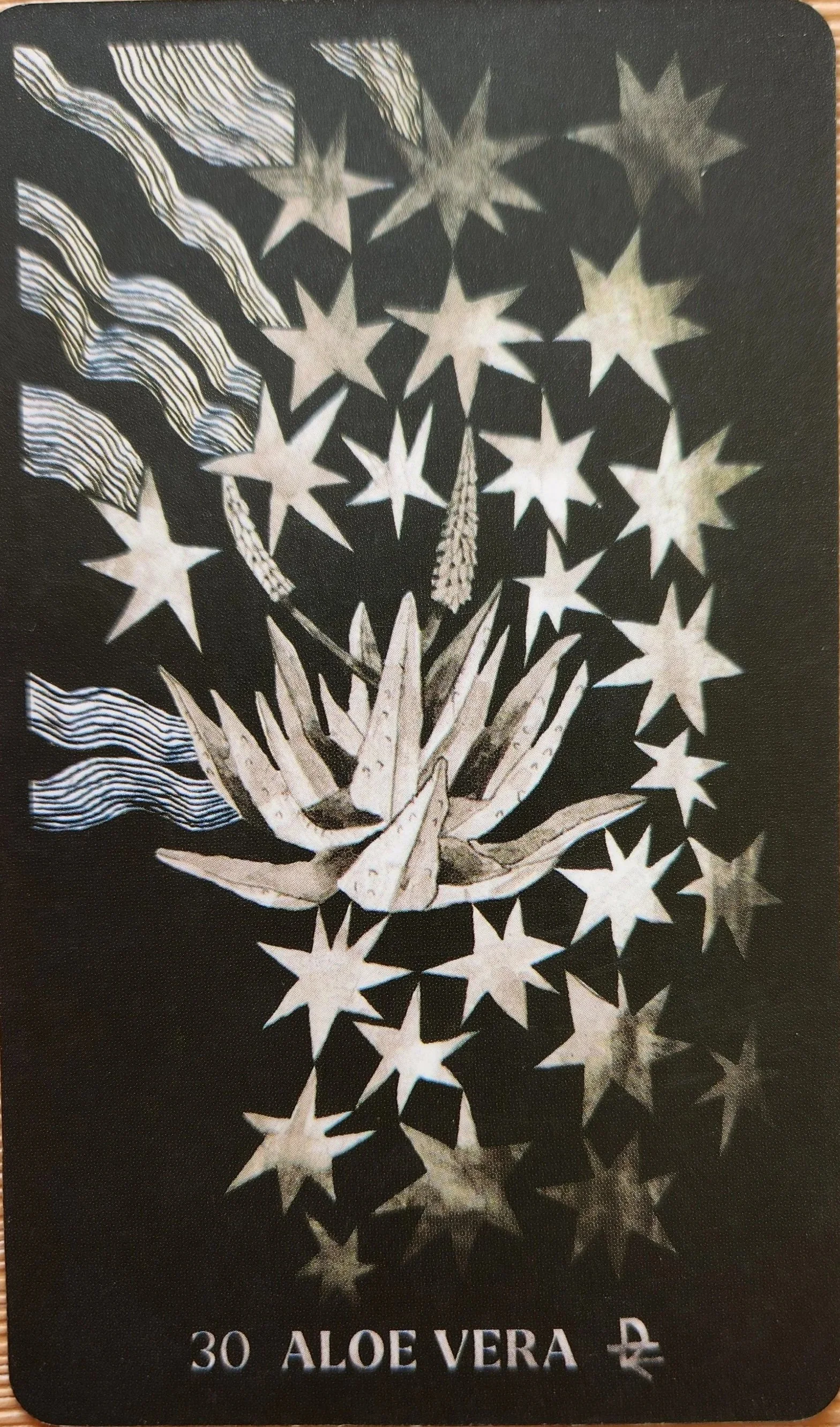
Sometimes the right response is not to push harder. Sometimes we need relief.
Aloe asks us to consider:
What would soothe me right now?
What would help me cool down?
Where am I burned out or overextended?
What support would help me feel nourished again?
Camille also pulls Barberry, a thorny plant that becomes a symbol of protection and boundaries.
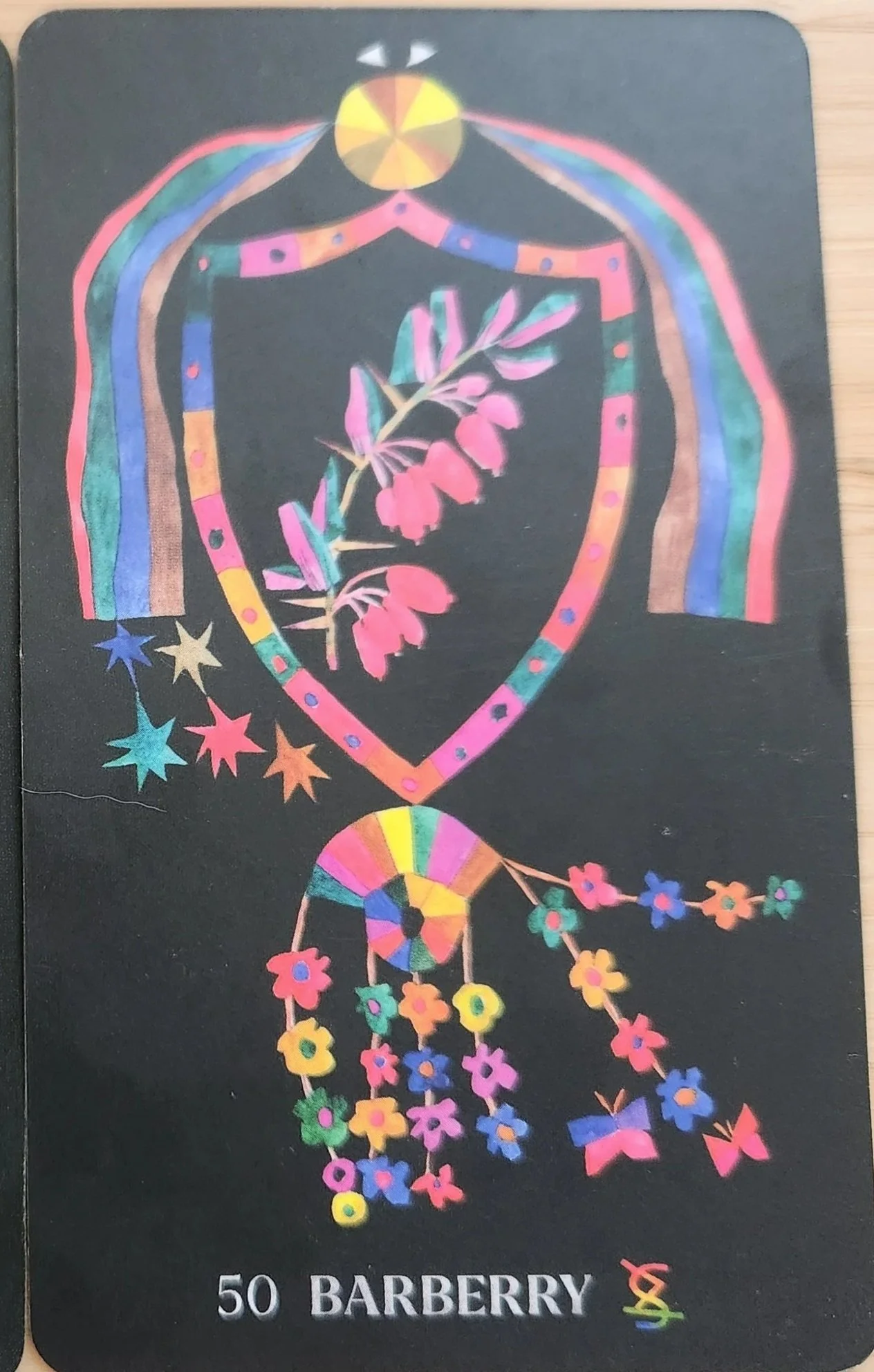
Barberry reminds us that some things hurt for a reason. Its thorns create distance between the plant and whatever might harm it. In the same way, boundaries can help protect our time, energy, attention, and emotional well-being.
Boundaries may look like:
saying no to commitments that drain you
stepping away from habits that no longer fit
protecting time for rest
limiting access to people or situations that repeatedly harm you
deciding what is not yours to carry
Boundaries are not a lack of love. They are one of the ways we preserve love, energy, and clarity.
The Ace of Wands Reversed and the Need to Pause
I pulled the Ace of Wands reversed, which brings the conversation to creative energy, frustration, and the pressure to move forward.
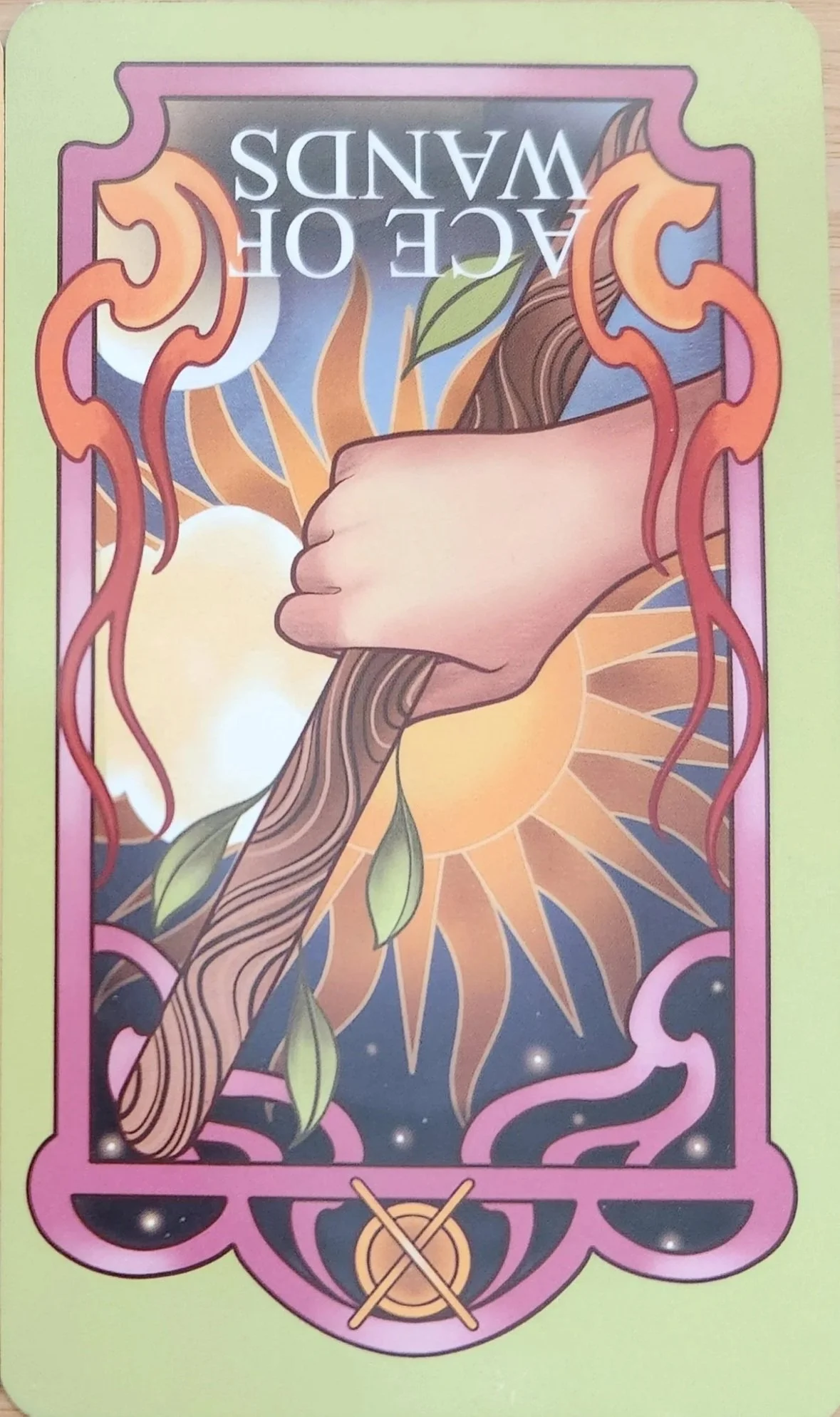
The Ace of Wands is often associated with new ideas, inspiration, and creative momentum. Reversed, it may suggest a delay, a pause, or frustration around a project.
Safrianna offers an important perspective: the pause may be useful. If your energy feels blocked or scattered, the answer may not be to force yourself forward.
Instead, you might need to ask:
Is this idea still aligned with me?
Am I continuing this because I want to, or because I have always done it?
What would happen if I paused before making the next move?
Is my frustration pointing toward a change I need to make?
Burnout often develops through small additions. One more task. One more responsibility. One more step in the process. Eventually, the entire routine becomes too much, even if each individual piece once seemed manageable.
The Ace of Wands reversed invites us to pause and reassess before adding more.
The Queen of Wands and Quiet Confidence
The Queen of Wands brings a different kind of fire to the reading.
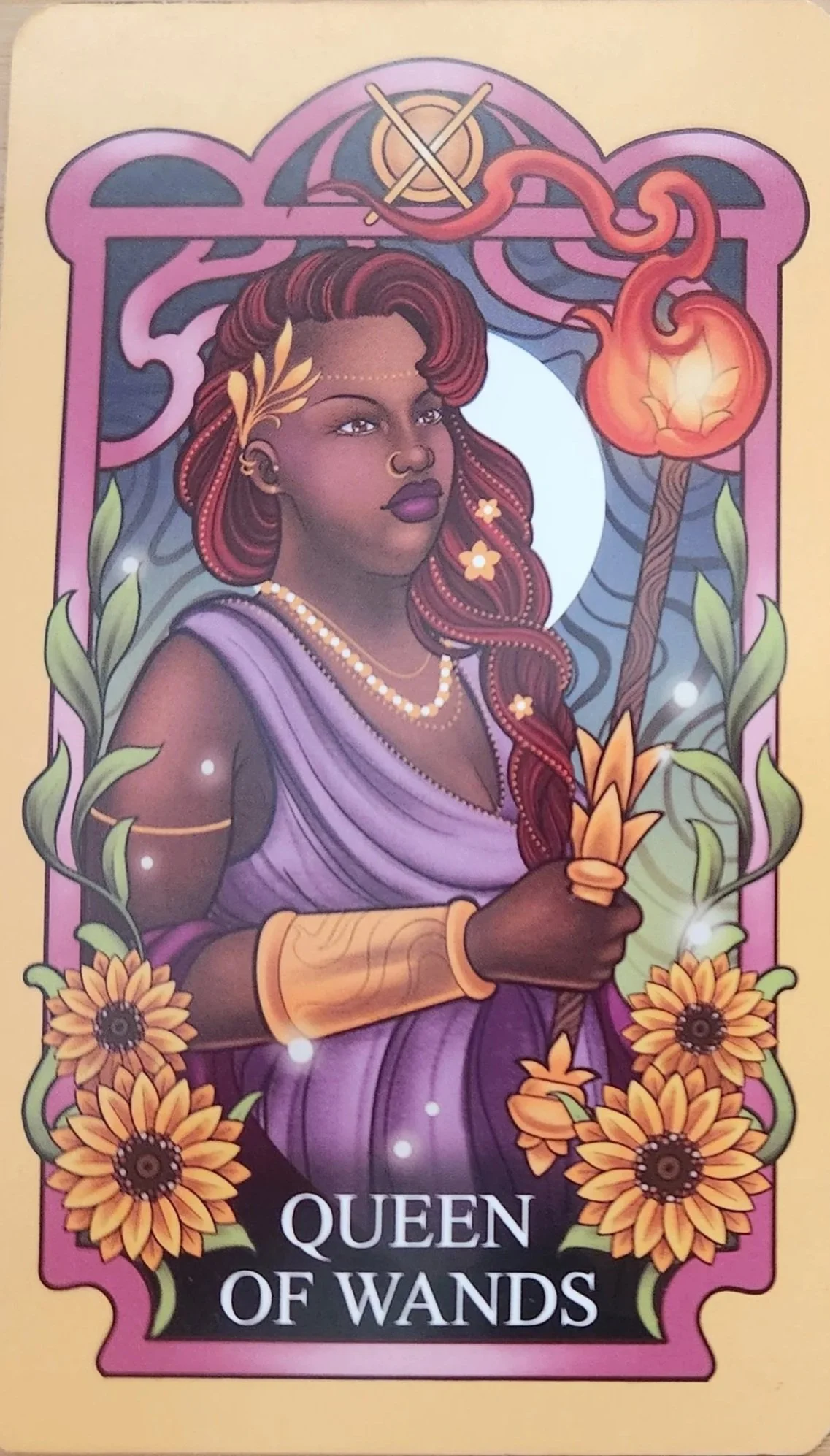
She represents confidence, creative energy, leadership, and the courage to be seen. But Camille and Safrianna emphasize that confidence does not have to be loud to be real.
True confidence can be quiet. It can come from knowing yourself, understanding your values, and standing firmly in what feels right for you.
The Queen of Wands asks:
What do I know about myself now?
What am I ready to embody?
Where am I shrinking to make other people comfortable?
What kind of leadership do I want to practice in my own life?
The Queen of Wands is not necessarily asking you to become more visible. She is asking you to become more authentic.
Seasonal Living and the Problem of “Artificial Summer”
A central idea in this episode is what Safrianna calls artificial summer: the cultural expectation that we should always be producing, growing, consuming, and performing at our highest level.
Modern life often tells us that every day should be a peak season.
But nature does not work that way. There are periods of growth, harvest, dormancy, decay, rest, and renewal. Each season has a purpose.
Safrianna shares how summer is both an abundant and demanding time for her as a gardener and homesteader. Harvest season can bring wonderful abundance, but it can also create more work than one person can easily manage.
She also talks about deliberately taking time to rest, play video games, eat snacks, and do nothing productive. That rest was not a failure to keep up. It was a necessary part of caring for herself.
Seasonal living can help us release the expectation that we should always be in our most productive mode.
Try asking yourself:
What does this season ask of me?
What does it not ask of me?
What pace is sustainable for my body?
Am I honoring my own rhythm, or only following my calendar?
Where am I trying to force a season that has not arrived yet?
If you are exhausted, the next step may not be more optimization. It may be rest, simplification, or a return to the basics.
What Druidry Adds to the Conversation
Safrianna shares how Druidry became an important spiritual path in her life.
She first encountered the word “druid” through fantasy worlds like Dungeons & Dragons and World of Warcraft. Later, after waking from a dream with the phrase “I am a druid” in her mind, she began researching what Druidry meant in real life.
For Safrianna, Druidry is a spiritual path centered on nature, learning, wisdom, and relationship with the living world. Nature becomes a teacher and a mirror.The trees, plants, seasons, stars, weather, and landscape all offer opportunities for reflection. They show us that life can be both slow and rapid, abundant and difficult, cyclical and unpredictable.
That perspective connects deeply with the rest of the episode. The cards, plants, seasons, and body are all giving us information. The invitation is not to override those signals, but to listen.
A Reminder to Follow Your Own Season
One of the most important points Safrianna makes is that everyone’s season looks different.
Even people living in the same hemisphere may experience summer differently depending on their location, climate, responsibilities, health, and stage of life. Your Wheel of the Year will not look exactly like someone else’s.
There is no single correct way to live seasonally.Your practice may involve gardening, tarot, meditation, time outside, seasonal food, rest, journaling, ritual, or simply noticing how your energy changes throughout the year.
The goal is not to create another system you can fail at. The goal is to become more attentive to what is actually happening in and around you.
Final Takeaway
This conversation offers permission to release the pressure of constant productivity.
The Wheel reminds us that life changes. The Ten of Wands reversed reminds us that we can put down burdens. The Heart Guardian reminds us to treat ourselves with compassion. Aloe offers soothing and restoration. Barberry teaches boundaries. The Ace of Wands reversed invites us to pause. And the Queen of Wands reminds us that confidence can come from simply knowing who we are.
If you have been feeling stretched thin, stuck in overcommitment, or unsure how to move forward without forcing things, this episode is a reminder that gentleness is not weakness. It is strategy.
Want More Tarot In Your Life?
If you loved the episode and want more, head over to Patreon right now to check out my exclusive tarot draw
If you love the show, the best way to support it for free is by listening daily, leaving a review, and subscribing or following in your favorite podcast app.
Join my newsletter list to get my Hallowed High Priestess Tarot Spread
If you’d like to be a guest on the show, fill out my guest inquiry here.
References:
Safrianna’s first deck, Mystic Fairy Tarot
Safrianna pulled cards from:
The DruidCraft Tarot- The Wheel card
Angels and Ancestors deck- Heart Guardian
Camille pulled cards from:
Ace of Wands Reversed
Queen of Wands
Aloe Vera
Barberry
Connect with Safrianna Lughna:
Website: https://Safrianna.com
Substack: (Primary Platform) Safrianna.Substack.com
LinkedIn: https://www.linkedin.com/in/safrianna/
Instagram: https://www.instagram.com/druidsafrianna/
🌙 Support the Podcast 🌙
If you loved the episode and want more, head over to Patreon to check out my exclusive tarot draw, and join us for the rest of the reading.
Join my newsletter list to my FREE Hallowed High Priestess Tarot Spread
Check out all the books I reference on the podcast here